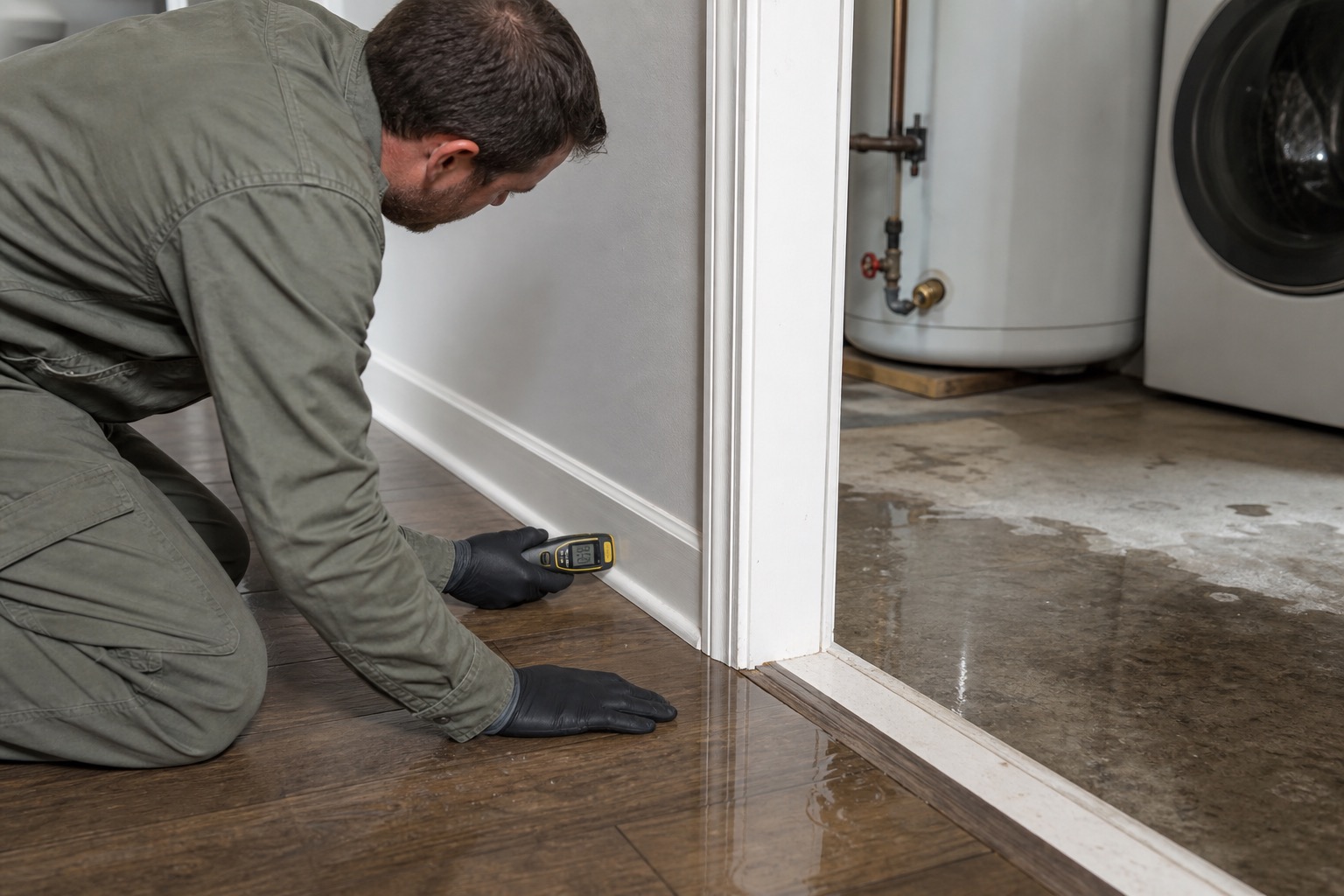
A clear sequence for separating immediate safety, water removal, drying, cleanup, and repair decisions—without vague explanations or unnecessary confusion.
Stay clear of electrical hazards, unstable ceilings, contaminated water, and any area that appears unsafe.
2
Stop the source when practical
Only approach a valve, fixture, or appliance when it can be reached and operated safely.
3
Document the starting condition
Photograph affected rooms and list wet materials before conditions change.
4
Remove accessible water
The appropriate method depends on the source, amount, access, and materials involved.
5
Check beyond the visible edge
Flooring layers, trim, cabinets, walls, insulation, and rooms below may also hold moisture.
6
Plan drying, cleanup, and repairs
These decisions are related, but each deals with a different part of the property response.
Tulsa service context
A practical water-damage reference for Tulsa
Describe the building
Share whether the affected space is a home, apartment, rental, office, or retail interior, plus the floor or level where the water appeared.
Describe the source
Tulsa calls may involve strong storms, flash flooding, roof exposure, and sudden temperature changes, plumbing failures, fixture overflows, or appliance connections. Explain what is known and whether water is still entering.
Describe the moisture path
Include connected rooms, wall bases, flooring edges, cabinets, ceilings below, and any other place where water or staining appeared.
Tulsa water damage can follow a fast-moving storm, a roof opening, a frozen or failed pipe, an overflowing fixture, or an appliance connection. Because water follows low points and openings, the affected area may continue beneath flooring, through wall cavities, or into a lower room. The first call should build a clear timeline and a practical map of the property.