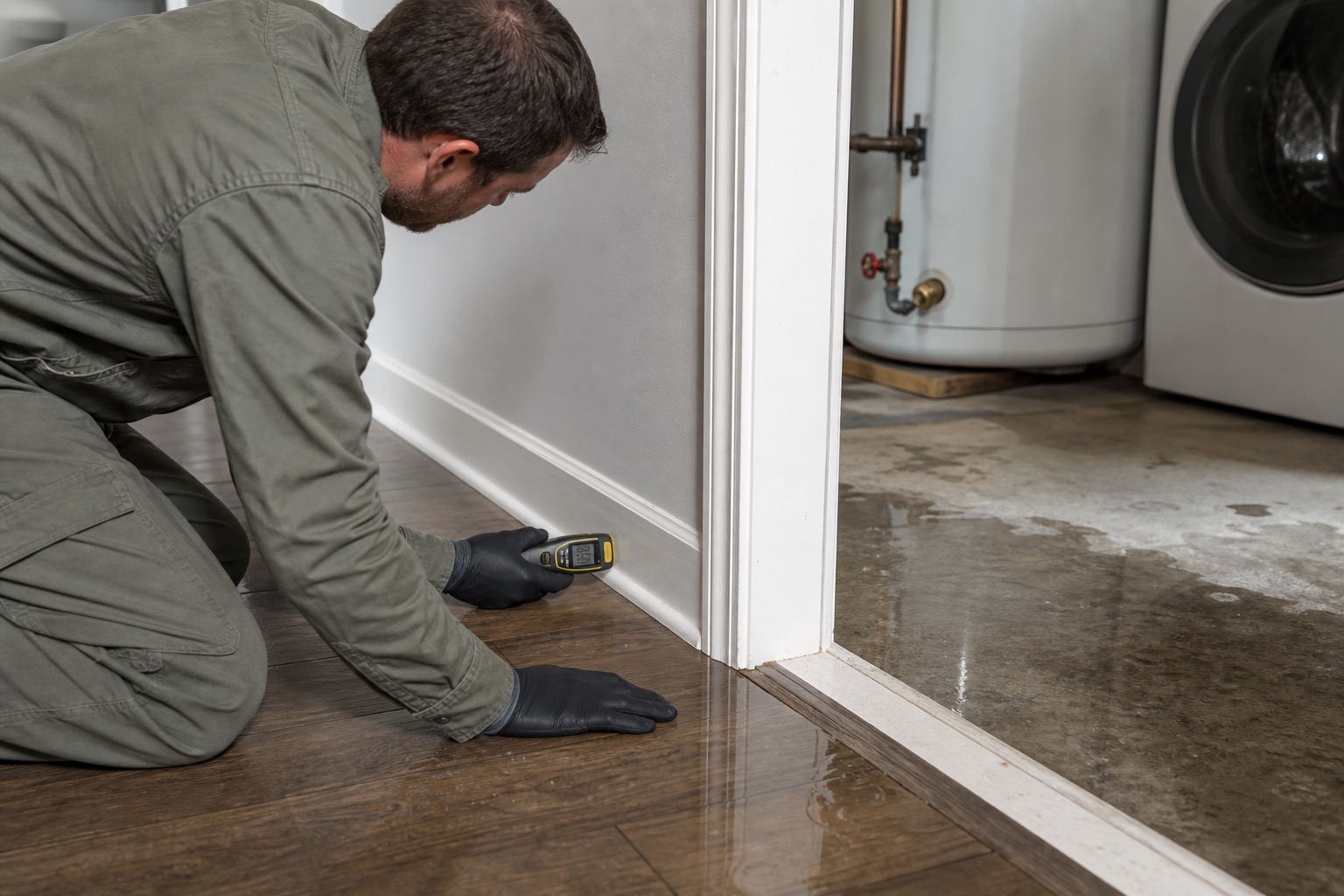
Water extraction works best when it fits the source, affected rooms, materials, and larger moisture response. Call the company that starts with the details instead of a generic pitch.
The source and timing help frame which areas and materials deserve attention.
2
Follow the likely moisture path
The visible edge is useful information, but it may not define the full affected area.
3
Match the method to the conditions
Water removal should fit the amount, access, source, and materials.
4
Use information for next steps
Moisture information supports better drying, cleanup, and material decisions.
Tulsa service context
Water extraction should support the larger drying plan.
Describe the building
Share whether the affected space is a home, apartment, rental, office, or retail interior, plus the floor or level where the water appeared.
Describe the source
Tulsa calls may involve strong storms, flash flooding, roof exposure, and sudden temperature changes, plumbing failures, fixture overflows, or appliance connections. Explain what is known and whether water is still entering.
Describe the moisture path
Include connected rooms, wall bases, flooring edges, cabinets, ceilings below, and any other place where water or staining appeared.
Tulsa water damage can follow a fast-moving storm, a roof opening, a frozen or failed pipe, an overflowing fixture, or an appliance connection. Because water follows low points and openings, the affected area may continue beneath flooring, through wall cavities, or into a lower room. The first call should build a clear timeline and a practical map of the property.